
Stretching is often recommended as part of a horse's management, conditioning and rehabilitation programme, but one question I am asked time and time again is:
"Should I stretch my horse before or after exercise?"
The short answer is after, at least when we're talking about passive limb stretches.
Passive stretching and dynamic mobilisation exercises are often confused, yet they have very different purposes. In this article, I'll explain what passive stretching is, why I generally recommend performing it after exercise, how to do it safely and what the current evidence tells us.
What Are Passive Limb Stretches for Horses?
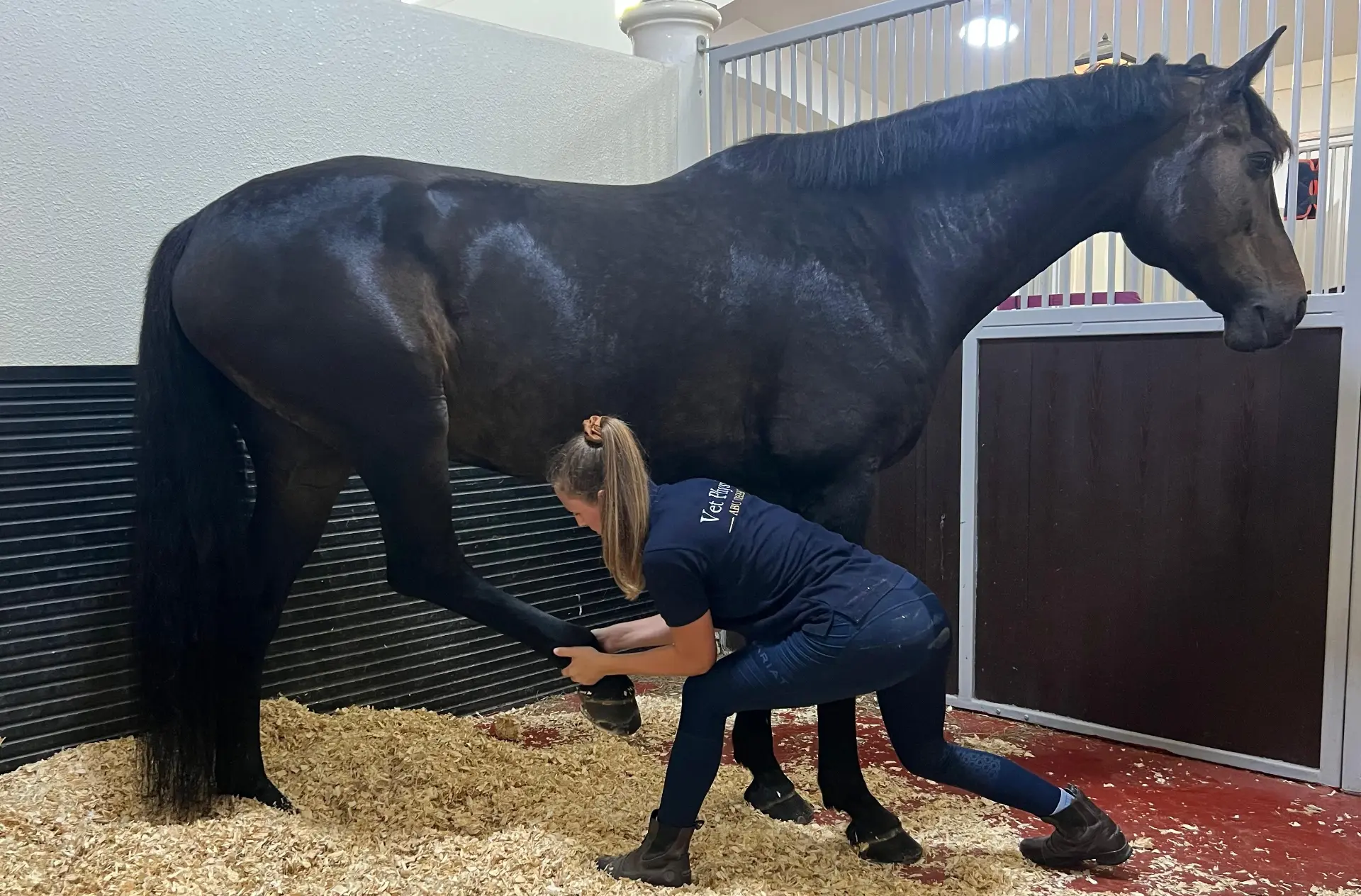
Passive limb stretches involve the handler or therapist gently moving the horse's limb through its available range of motion while the horse remains relaxed and does not actively contribute to the movement.
Unlike dynamic mobilisation exercises, where the horse actively moves its own body, passive stretching relies on an external force to move the limb. It is commonly incorporated into rehabilitation programmes, maintenance physiotherapy and post-exercise recovery.
When performed correctly, passive stretching may help maintain joint range of motion, preserve muscle and soft tissue flexibility, reduce stiffness and improve overall comfort. It also provides valuable clinical information, allowing a veterinary physiotherapist to identify restrictions, asymmetries or areas of discomfort during an assessment.
Why I Generally Recommend Passive Stretching After Exercise
For most healthy horses, passive limb stretches are best performed after exercise, massage or heat, once the muscles and surrounding soft tissues have been warmed through.
As the horse exercises, blood flow to the muscles increases, tissue temperature rises and connective tissues become more pliable. Movement also improves synovial fluid circulation within the joints, helping them move more freely. Together, these changes mean the muscles and surrounding soft tissues are generally more receptive to stretching than when the horse is cold.
Before exercise, the priority is to prepare the horse for movement by gradually increasing muscle activity, coordination and joint motion. For this reason, an active warm-up and dynamic mobilisation exercises are generally more appropriate than passive stretching before work.
Passive stretching is therefore better suited to the post-exercise period, when the body has already been prepared for movement and the tissues are more comfortable to lengthen.
How to Perform Passive Limb Stretches on Your Horse
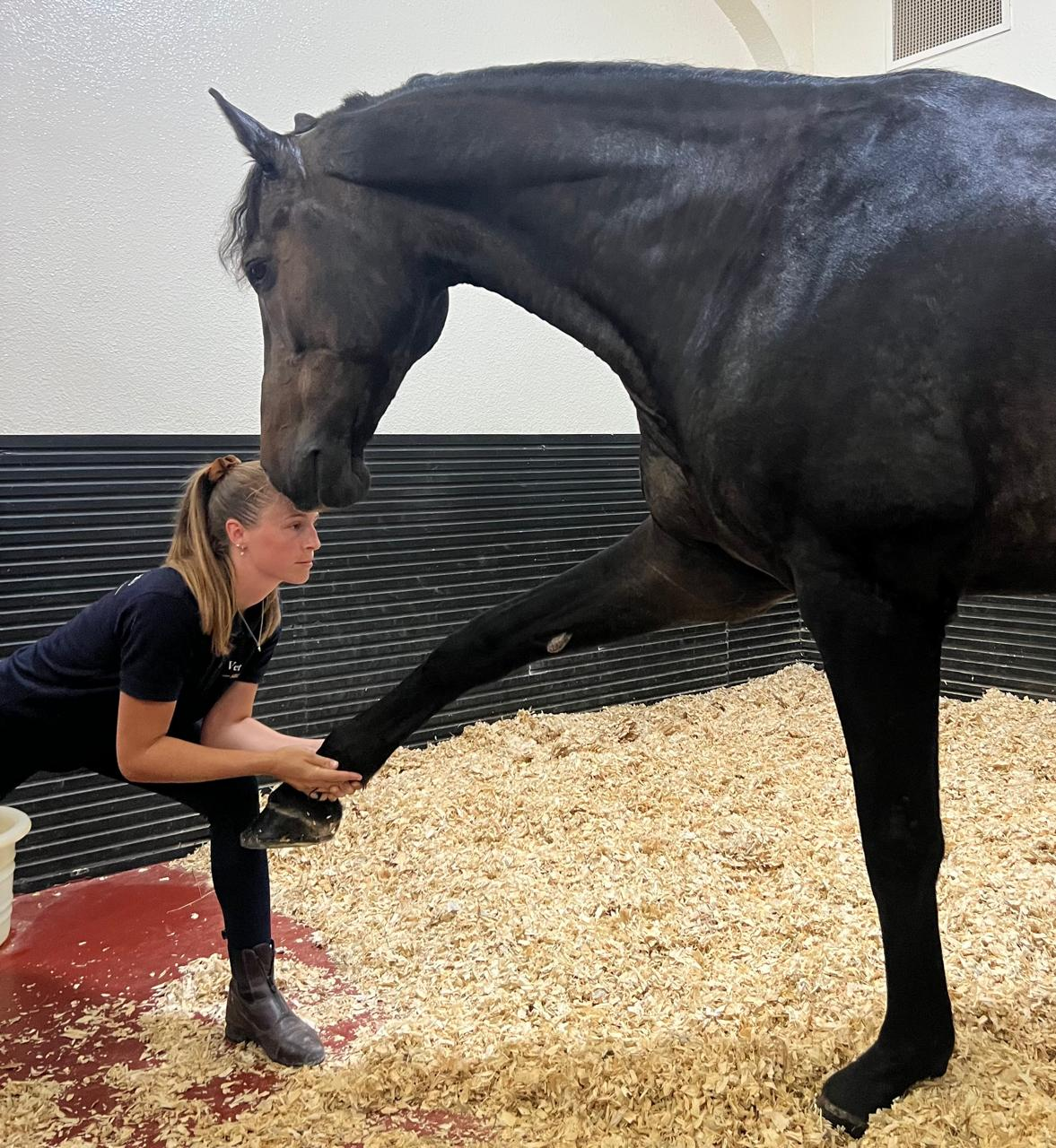
Passive stretching should always be slow, controlled and comfortable for the horse.
The limb should be moved gradually until a gentle stretch is felt before holding the position. The stretch should never be forced, bounced or taken beyond the horse's comfortable range of motion. Throughout the stretch, the horse should remain relaxed, and the limb should always be returned slowly to the ground.
If your horse braces against the movement, pulls the limb away or appears uncomfortable, the stretch should be stopped and reassessed rather than pushed further. Stretching should never be painful.
Top Tips for Passive Stretching
Passive stretching should be comfortable for both you and your horse. Good technique not only makes stretching more effective but also helps keep both horse and handler safe.
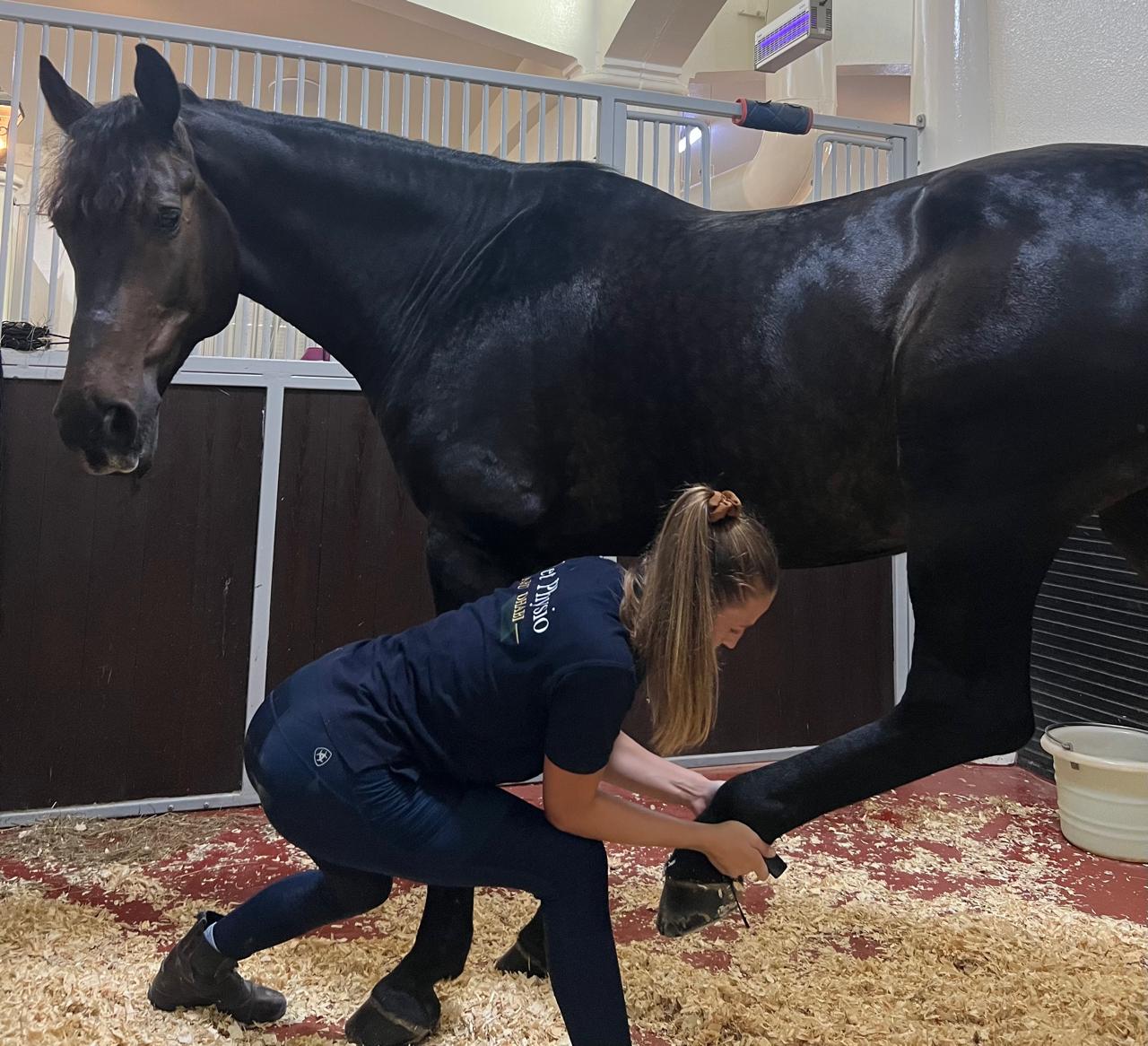
Look after your own posture. Stand with a wide, stable base of support, similar to a lunging position, keeping your back straight and your knees slightly bent. Where appropriate, rest your elbow on your knee to help support the weight of the limb rather than relying on your arms or back. Not only does it save your back, the horse will feel more relaxed and confident in the stretch, if you are strong and positioned well.
Take your time. When you pick up the limb, allow your horse a few moments to relax before asking for the stretch. Rushing straight into the movement often encourages the horse to brace or pull away.
If your horse pulls the limb away, don't fight them. Gently return the limb, allow the horse to relax, then try again, take your time and use a slightly smaller range of motion. Gradually increase the stretch as your horse becomes more comfortable rather than forcing the movement.
Warm the tissues first. Passive stretching is generally best performed after exercise, massage or the application of heat, once the muscles and surrounding soft tissues are warm. Stretching cold tissues is less effective and may increase the risk of injury.
How Long Should Each Stretch Be Held?
The ideal stretch duration depends on the individual horse, the tissue being stretched and the aim of the stretch. In human physiotherapy, stretches are often held for 15 to 30 seconds, although research has shown that longer durations may produce greater improvements in range of motion.
For horses, there is limited direct evidence, so recommendations are often based on clinical experience and principles borrowed from human and small animal physiotherapy. Generally, stretches are held for 15 to 30 seconds and repeated two to four times per limb.
It is important to remember that more is not always better. A slow, controlled stretch held for an appropriate duration is likely to be more beneficial than a long, forceful stretch. The horse should remain relaxed throughout, and the stretch should never be pushed into resistance or discomfort.
How Often Should You Stretch Your Horse?
The frequency of passive stretching will depend on why you are stretching. For maintenance and general flexibility, two to three sessions per week may be sufficient. For rehabilitation following injury or surgery, your veterinary physiotherapist may recommend a more specific programme tailored to your horse's needs.
Stretching should be performed consistently, but it does not need to be lengthy. A few targeted stretches after exercise or once the tissues are warm can be a valuable addition to your horse's management.
When Should Passive Stretching Be Avoided?
Passive stretching is not appropriate in every situation. It should be avoided or used with caution if your horse has an acute injury, fracture, severe lameness, open wound, active infection, neurological condition, or if stretching causes pain, resentment or distress.
If your horse has a known musculoskeletal or neurological condition, always seek guidance from a veterinary physiotherapist or veterinarian before introducing stretches. They can advise whether passive stretching is suitable and demonstrate safe technique for your horse.
Research Spotlight: What Does the Evidence Say?
Scientific research into passive stretching in horses is still developing, but several studies provide useful guidance.
McGowan et al. (2011) found that a controlled stretching programme improved muscle length and stride length in horses, suggesting that regular stretching can have measurable functional benefits.
Palmieri et al. (2022) demonstrated improvements in muscle length and joint range of motion with a structured stretching programme, supporting the use of passive stretches as part of rehabilitation and maintenance.
Stubbs et al. (2011) showed that stretching after exercise, when tissues are warm, may be more effective than stretching cold tissues. This supports the recommendation to perform passive limb stretches after work rather than before.
Overall, the evidence supports passive stretching as a useful tool when performed correctly, consistently and at the right time.
Key Take Home Points
Passive stretching can be a valuable part of your horse's management and rehabilitation programme when performed at the right time and in the right way.
For most healthy horses, passive limb stretches are best performed after exercise, massage or heat application, once the tissues are warm. Each stretch should be slow, controlled and comfortable for the horse, held for around 15 to 30 seconds and repeated two to four times.
Always stop if your horse shows signs of discomfort, and seek guidance from a veterinary physiotherapist if your horse has a known injury or condition.
References
McGowan, C. M., Stubbs, N. C., & Jakes, N. (2011). Evaluation of the effects of the Tellington Touch Equine Awareness Method on the behaviour and selected physiological and biomechanical responses of horses. Veterinary and Comparative Orthopaedics and Traumatology.
Palmieri, C. (2022). Passive stretching in horses: a review. Journal of Equine Veterinary Science.
Stubbs, N. C., Hodges, P. W., & McGowan, C. M. (2011). Passive stretching in the horse: techniques and evidence. Equine Veterinary Education.
If you would like tailored advice on stretching your horse, book a horse physiotherapy assessment in Abu Dhabi.