What Is Veterinary Physiotherapy and How Can It Benefit Your Animal?
Veterinary physiotherapy can support animals at every stage of life, from young sporting and competition animals looking to optimise performance, to senior pets requiring support with mobility and age-related changes. It is also commonly used alongside veterinary treatment to assist with recovery following injury, illness, or surgery.
Whether your goal is rehabilitation, performance enhancement, injury prevention, or maintaining long-term comfort and mobility, veterinary physiotherapy provides a tailored approach to supporting your animal's musculoskeletal health and wellbeing.
This guide explains what veterinary physiotherapy is, how it works, and when professional rehabilitation support may benefit your animal.
What Is Veterinary Physiotherapy?
Veterinary physiotherapy is an evolving field focused on improving movement, function, comfort, and quality of life in animals.
Working alongside your veterinarian, a veterinary physiotherapist assesses how an animal moves, identifies areas of weakness, stiffness, asymmetry, or dysfunction, and develops a tailored treatment plan based on the individual animal's needs.
Physiotherapy does not replace veterinary diagnosis or medical treatment. Instead, it complements veterinary care by supporting recovery following injury or surgery, improving mobility and performance, managing age-related changes, and helping maintain long-term musculoskeletal health.
Depending on the individual animal and condition, treatment may include:
• Clinical assessment and movement analysis
• Massage and myofascial release
• Joint mobilisation and stretching
• Remedial exercise and rehabilitation programmes
• Strength, balance, and proprioceptive training
• Kinesiology taping
• Electrotherapy, including laser therapy, PEMFT, and heat therapy
• Home exercise and management recommendations
Every treatment plan is tailored to the individual animal, their medical history, lifestyle, and goals.
How Does Veterinary Physiotherapy Work?
Every animal is different, which is why physiotherapy begins with a thorough clinical assessment.
During the appointment, the physiotherapist will discuss your animal's medical history, workload, lifestyle, and any concerns you may have. This is followed by a detailed assessment, which may include evaluating:
• Posture and conformation
• Movement patterns and gait
• Muscle development and symmetry
• Joint range of motion
• Flexibility and mobility
• Strength and balance
• Functional movement and performance
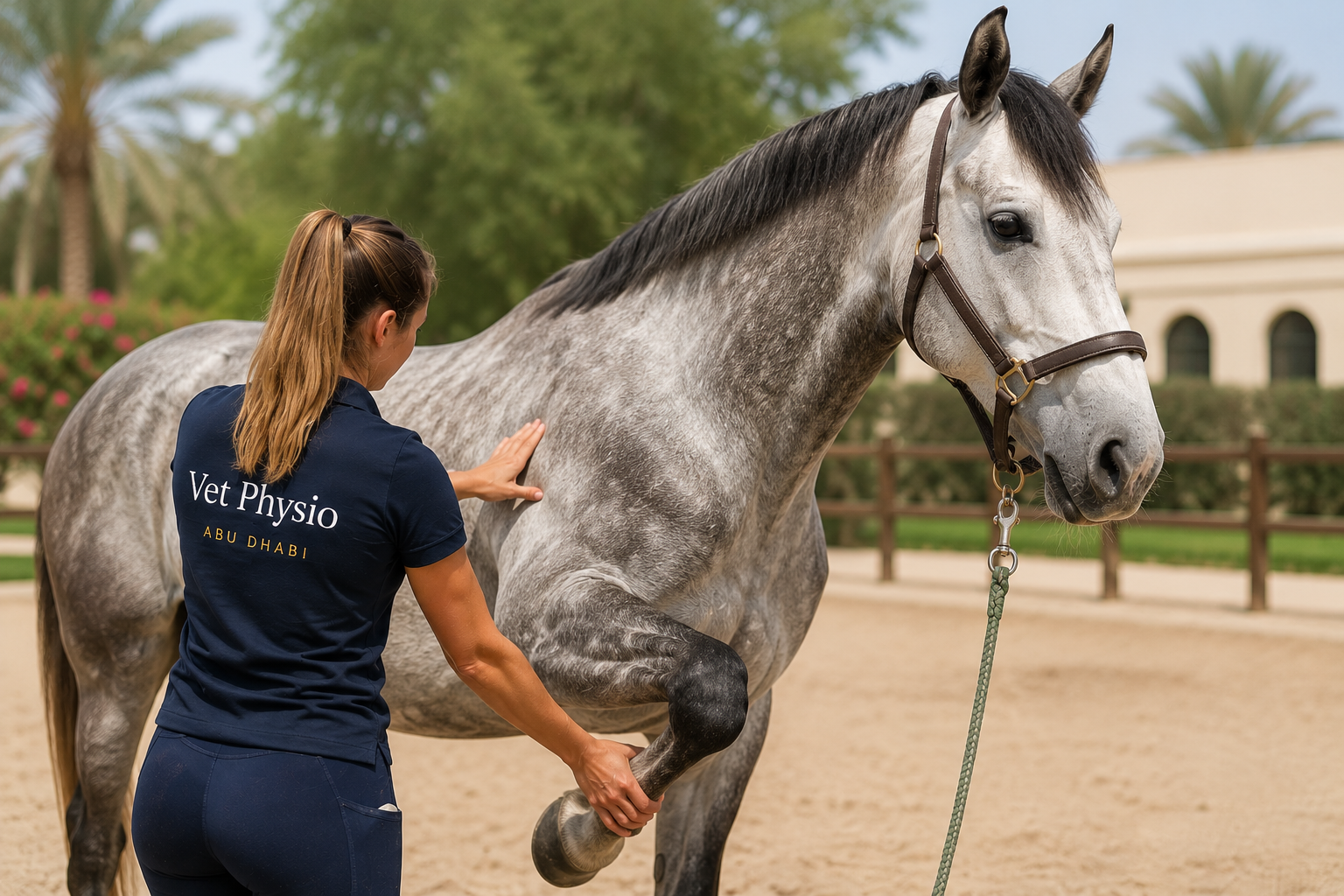
For horses, this may involve assessing movement at walk and trot, and where appropriate, under saddle. For dogs, movement may be assessed during walking, turning, standing, sitting, and specific functional exercises.
The findings from the assessment help identify areas of weakness, stiffness, compensation, or dysfunction and form the basis of an individualised treatment plan.
Depending on the animal's needs, treatment may include a combination of manual therapies, rehabilitation exercises, electrotherapy, kinesiology taping, and home management recommendations. Progress is monitored through regular reassessments, allowing the treatment plan to be adjusted as your animal improves.
Conditions Commonly Treated With Veterinary Physiotherapy
Veterinary physiotherapy may be recommended for a wide range of musculoskeletal and neurological conditions.
Horses
Equine physiotherapy is commonly used to support horses experiencing:
Tendon injuries
Ligament injuries
Back pain
Joint stiffness
Muscle imbalances
Reduced performance
Post-surgical recovery
Lameness-related rehabilitation
Conditioning and fitness deficits
The UAE has a thriving equestrian community, with horses participating in racing, endurance riding, show jumping, dressage, and recreational riding.
Performance horses often place considerable demands on their musculoskeletal systems. Early identification of movement restrictions or compensatory patterns can help support both recovery and long-term performance.
Dogs
Canine physiotherapy may be beneficial for dogs affected by:
Arthritis
Hip dysplasia
Cruciate ligament injuries
Post-operative recovery
Neurological conditions
Muscle weakness
Mobility limitations
Weight-related movement challenges
Age-related stiffness
Senior dogs in particular may benefit from carefully structured rehabilitation programmes designed to maintain strength, mobility, and independence. As dogs age, maintaining mobility becomes increasingly important. Reduced activity can lead to muscle weakness, further limiting movement and affecting overall wellbeing.
Structured rehabilitation programmes help encourage safe activity while supporting long-term mobility and comfort.
Other Animals
Depending on individual circumstances and veterinary guidance, rehabilitation techniques may also be used to support working animals, sporting animals, and other companion animals requiring physical rehabilitation.
Benefits of Veterinary Physiotherapy
The primary goal of physiotherapy is to improve function and quality of life.
Benefits may include:
Improved Mobility
Restricted movement can significantly affect an animal's comfort and performance. Physiotherapy aims to improve flexibility, joint mobility, and overall movement efficiency.
Pain Management Support
Many musculoskeletal conditions can lead to discomfort and reduced activity levels. Rehabilitation programmes may help manage pain by addressing underlying movement dysfunction and improving physical function.
Enhanced Muscle Development
Injury, inactivity, and ageing can lead to muscle loss. Structured exercise programmes help encourage appropriate muscle development and improve overall strength.
Support During Recovery
Following surgery or injury, rehabilitation can help animals return to activity gradually and safely while reducing the risk of complications associated with prolonged inactivity.
Improved Athletic Performance
For sporting and performance animals, physiotherapy can support strength, flexibility, coordination, and movement quality, all of which contribute to physical performance.
Reduced Risk of Future Injury
By identifying weaknesses, imbalances, or movement abnormalities, rehabilitation programmes may help reduce the likelihood of recurring issues and support long-term soundness.
What Happens During a Physiotherapy Assessment?
Many owners are unsure what to expect from an initial physiotherapy appointment.
The appointment begins with a discussion about your animal's medical history, workload, lifestyle, and any concerns you may have. This is followed by a detailed clinical assessment, which may include:
• Posture and conformation assessment
• Movement and gait analysis
• Muscle palpation and soft tissue assessment
• Joint range of motion assessment
• Flexibility, strength, and balance evaluation
• Functional movement testing where appropriate
Following the assessment, findings will be discussed, treatment may begin during the same appointment, and a tailored treatment plan will be developed based on your animal's individual needs and goals.
Progress is monitored through regular reassessments, allowing the treatment plan to be adjusted as your animal improves.
When Should You Consider Veterinary Physiotherapy?
Many owners seek physiotherapy following an injury or surgery, but treatment can be beneficial in a variety of situations.
You may wish to consider a physiotherapy assessment if your animal is:
• Recovering from injury or surgery
• Showing signs of stiffness or reduced mobility
• Experiencing changes in performance or behaviour
• Returning to work following a period of rest
• Managing a long-term musculoskeletal or neurological condition
• Showing signs of age-related weakness or discomfort
• Preparing for or participating in regular sporting activities
Early assessment may help identify movement restrictions, asymmetries, and compensatory patterns before they develop into more significant problems.
Veterinary Physiotherapy in Abu Dhabi
Vet Physio Abu Dhabi provides a fully mobile veterinary physiotherapy service for horses, dogs, and other small animals across the UAE.
Appointments take place at your stable or home, allowing treatment to be carried out in a familiar and convenient environment. Regular visits are available throughout Abu Dhabi, including Khalifa City, Yas Island, Saadiyat Island, Al Raha, Al Wathba, and surrounding areas, with appointments across the wider UAE available by arrangement.
Supporting Your Animal's Long-Term Health
Veterinary physiotherapy is about more than recovering from injury. It is a proactive approach to supporting movement, comfort, performance, and long-term musculoskeletal health.
Whether your animal is recovering from surgery, returning to work, managing age-related changes, or simply benefiting from routine maintenance, physiotherapy can help support their comfort, mobility, and quality of life.
If you would like to learn more about our veterinary physiotherapy and rehabilitation services, visit our homepage, explore our services, or learn more about our team. To discuss your animal's individual needs, please get in touch via one of our channels.