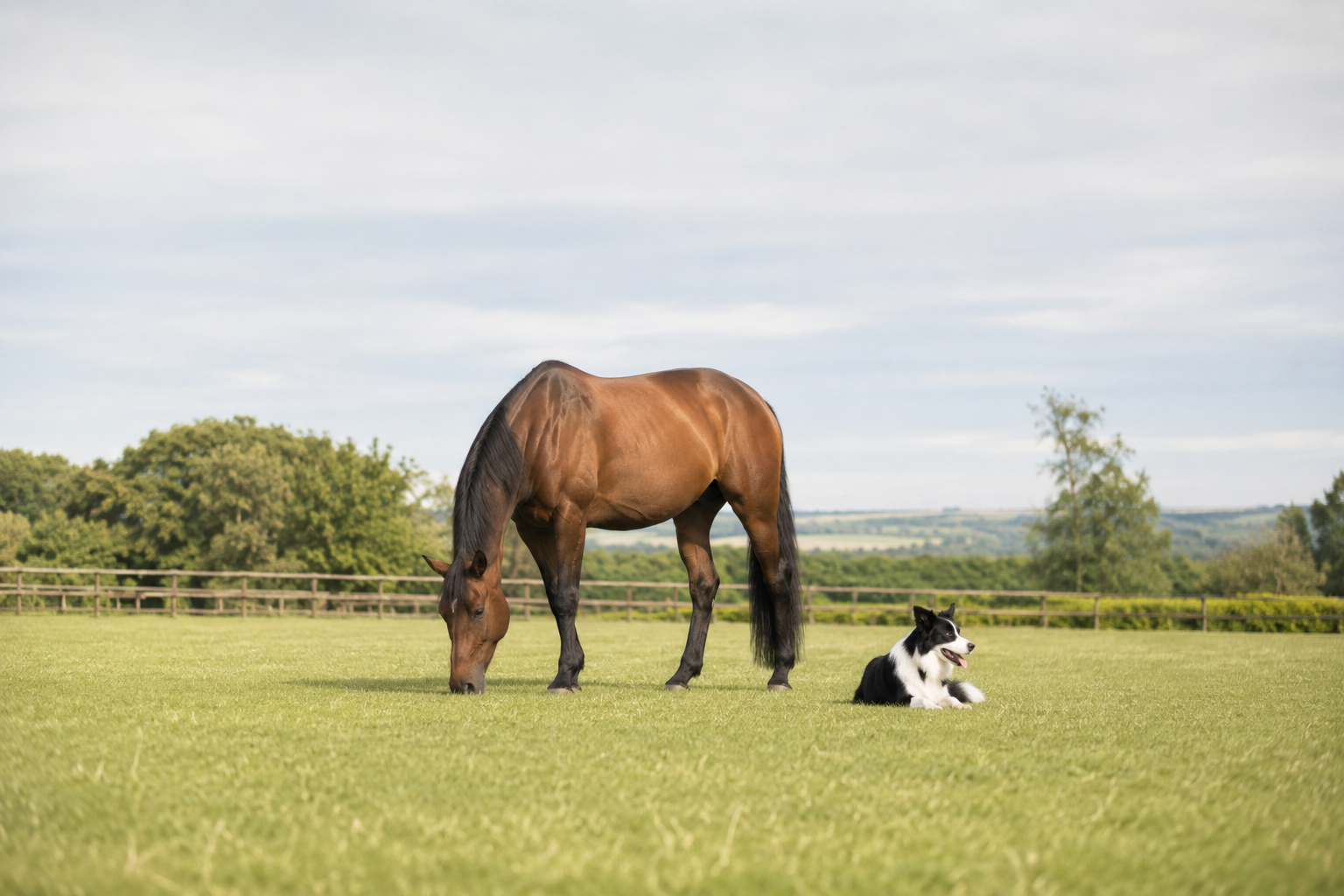
Horses and dogs are often very stoic and rarely show signs of discomfort unless it becomes harder to ignore.
Animals frequently continue to perform, exercise, and carry out their daily routines despite experiencing discomfort or physical limitations. As a result, subtle changes in movement, behaviour, or performance can easily be overlooked until a more significant problem develops.
Whether you own a competition horse, an active sporting or working dog, or a much-loved family pet, recognising the early signs of physical dysfunction and scheduling regular physiotherapy check-ups may help identify sub-clinical issues and asymmetries before they progress into more significant problems. Veterinary physiotherapy and rehabilitation can help identify underlying musculoskeletal issues, support recovery, improve mobility, and assist animals in returning safely to normal activity.
Here are ten common signs that may indicate your horse or dog could benefit from a professional physiotherapy assessment.
1. Stiffness During Movement
One of the earliest indicators of musculoskeletal discomfort is stiffness.
You may notice your horse appearing less supple when warming up or your dog moving more slowly after resting. Some animals seem reluctant to stretch, struggle with certain movements, or require longer periods to become comfortable during exercise.
Stiffness can develop for many reasons, including:
Muscle tension
Joint discomfort
Previous injuries
Age-related changes
Reduced flexibility
Compensation for other physical issues
While occasional stiffness may not always indicate a serious problem, persistent or worsening stiffness should not be ignored.
Physiotherapy can help identify potential causes and support improved mobility through targeted rehabilitation programmes and therapeutic exercise.
2. Changes in Gait or Movement Patterns
Animals often adapt their movement to avoid discomfort.
For horses, this may appear as:
Shortened strides
Uneven movement
Difficulty bending
Changes in transitions
Reduced impulsion
For dogs, owners may notice:
Limping
Altered walking patterns
Bunny hopping
Difficulty turning
Uneven weight distribution
Changes in gait can indicate a variety of musculoskeletal or neurological issues. Early assessment can help identify abnormalities before they contribute to further strain elsewhere in the body.
3. Reluctance to Exercise or Work
A horse that suddenly resists schooling, refuses jumps, or struggles to maintain performance may not simply be behaving differently.
Similarly, dogs that previously enjoyed long walks, running, or playing may become less enthusiastic about physical activity.
Animals often reduce activity levels when movement becomes uncomfortable.
Common signs include:
Slowing down during exercise
Refusing previously normal activities
Increased fatigue
Resistance to training
Reduced enthusiasm for work
A physiotherapy assessment may help determine whether an underlying physical issue is contributing to these behavioural changes.
4. Reduced Performance
For performance horses and sporting dogs, subtle declines in performance can be one of the first signs that something is wrong.
Owners, riders, and trainers may notice:
Reduced stamina
Loss of power
Difficulty maintaining balance
Inconsistent performance
Reduced flexibility
Increased resistance during work
These changes do not always indicate injury. Muscle imbalances, restricted movement, weakness, and compensation patterns can all affect performance.
In the UAE's demanding equestrian environment, where horses frequently train and compete in challenging conditions, maintaining optimal musculoskeletal health is essential for long-term performance and welfare.
5. Difficulty Rising, Lying Down, or Getting Comfortable
Dogs experiencing discomfort often show difficulty rising from resting positions.
You may notice:
Slower transitions from lying to standing
Hesitation before standing
Multiple attempts to get up
Reluctance to lie down
Frequent position changes when resting
Horses may also display subtle signs such as:
Difficulty rolling
Reduced willingness to lie down
Changes in resting posture
These behaviours can indicate joint issues, muscle weakness, pain, or reduced mobility.
Older animals are particularly prone to developing movement limitations that may benefit from rehabilitation support.
6. Behavioural Changes
Physical discomfort often influences behaviour.
Many owners initially assume behavioural changes are training-related or simply part of ageing, when they may actually be linked to pain or physical restriction.
Possible warning signs include:
In Horses
Ear pinning during grooming
Resistance to saddling
Irritability during work
Changes in attitude
Reduced willingness to perform
In Dogs
Increased irritability
Withdrawal from interaction
Reduced playfulness
Reluctance to be touched
Changes in temperament
Behaviour should always be considered alongside physical assessment, particularly when changes occur suddenly or persist over time.
7. Muscle Loss or Poor Muscle Development
Healthy movement relies on balanced muscle development.
When an animal is unable to move correctly due to discomfort, injury, or weakness, muscle loss can occur surprisingly quickly.
Signs may include:
Visible muscle wastage
Uneven muscle development
Reduced topline in horses
Weak hindquarters
Loss of overall condition
Muscle asymmetry often indicates that an animal is compensating for another issue elsewhere in the body.
Veterinary physiotherapists assess muscle development as part of a comprehensive evaluation and can design exercises aimed at rebuilding strength safely and progressively.
8. Recurring Injuries or Repeated Physical Problems
Repeated injuries are often a sign that an underlying issue has not been fully addressed.
Examples include:
Recurrent lameness
Repeated soft tissue injuries
Ongoing back discomfort
Recurring mobility issues
Frequent muscular strain
While veterinary diagnosis remains essential, rehabilitation can help identify factors that may contribute to repeated problems.
These factors may include:
Weakness
Poor movement patterns
Reduced flexibility
Inadequate conditioning
Compensation strategies
Addressing these contributing factors can support long-term recovery and reduce the risk of future setbacks.
9. Challenges During Post-Operative Recovery
Recovery following surgery is rarely a straightforward process.
Whether a dog has undergone cruciate ligament surgery or a horse is returning to work after veterinary treatment, rehabilitation often plays an important role in supporting recovery.
Physiotherapy may help with:
Restoring mobility
Rebuilding strength
Improving balance
Supporting functional movement
Gradually increasing exercise levels
Structured rehabilitation programmes are often designed alongside veterinary recommendations to ensure progression remains appropriate throughout the recovery process.
10. Signs of Chronic Discomfort
Not all pain is obvious.
Many animals develop subtle coping mechanisms that mask ongoing discomfort.
Potential indicators include:
Reduced activity levels
Changes in posture
Weight shifting
Stiffness after exercise
Reluctance to perform certain movements
Changes in behaviour
Difficulty maintaining fitness
Over time, chronic discomfort can affect overall quality of life and contribute to secondary physical problems.
Recognising these signs early allows owners to seek professional advice before issues become more significant.
Why Early Intervention Matters
One of the most common mistakes owners make is waiting until symptoms become severe before seeking assistance.
Many movement-related issues begin gradually.
A slight stiffness today may become a significant mobility limitation months later. A minor compensation pattern can eventually place excessive strain on other areas of the body.
Early physiotherapy assessment may help:
Identify developing issues
Support recovery before problems worsen
Improve comfort
Maintain performance
Reduce future injury risk
Support long-term wellbeing
This is particularly important for performance horses, sporting dogs, senior animals, and those recovering from injury or surgery.
What Happens During a Veterinary Physiotherapy Assessment?
If you notice any of these warning signs, a professional assessment can provide valuable insight into your animal's physical condition.
A physiotherapy assessment typically includes:
Review of medical history
Discussion of current concerns
Postural assessment
Movement analysis
Muscle evaluation
Joint mobility assessment
Functional testing
Development of a personalised rehabilitation plan
Treatment recommendations are tailored to the individual animal and may include therapeutic exercise, stretching programmes, strengthening work, balance training, and owner-guided home exercises.
Supporting Animal Health Across Abu Dhabi and the UAE
As awareness of veterinary rehabilitation continues to grow across Abu Dhabi, Dubai, and the UAE, more owners are recognising the value of proactive physical healthcare.
Whether your horse is showing subtle changes in performance, your dog is becoming less active, or you simply want to support your animal's long-term wellbeing, recognising early warning signs can make a significant difference.
Veterinary physiotherapy is not solely for injured animals. It can also support mobility, performance, recovery, conditioning, and preventative care throughout every stage of life.
If you have noticed any of the signs discussed in this article, seeking professional advice may help identify underlying issues and support your animal's comfort, movement, and quality of life.
To learn more about our veterinary physiotherapy and rehabilitation services, explore our services page, learn more about our team, or get in contact to discuss your animal's individual needs.